
HOF
The House of the Future
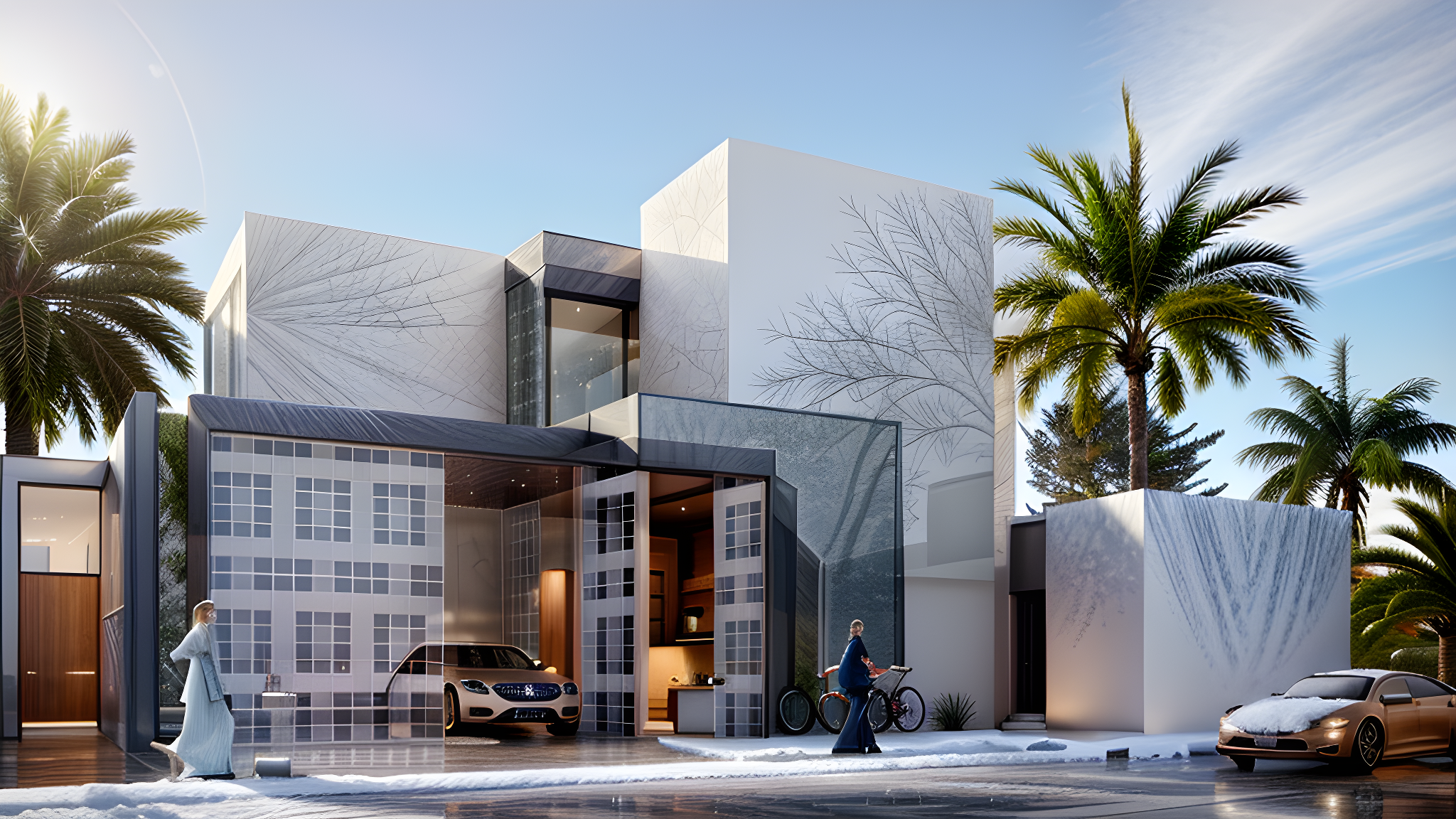
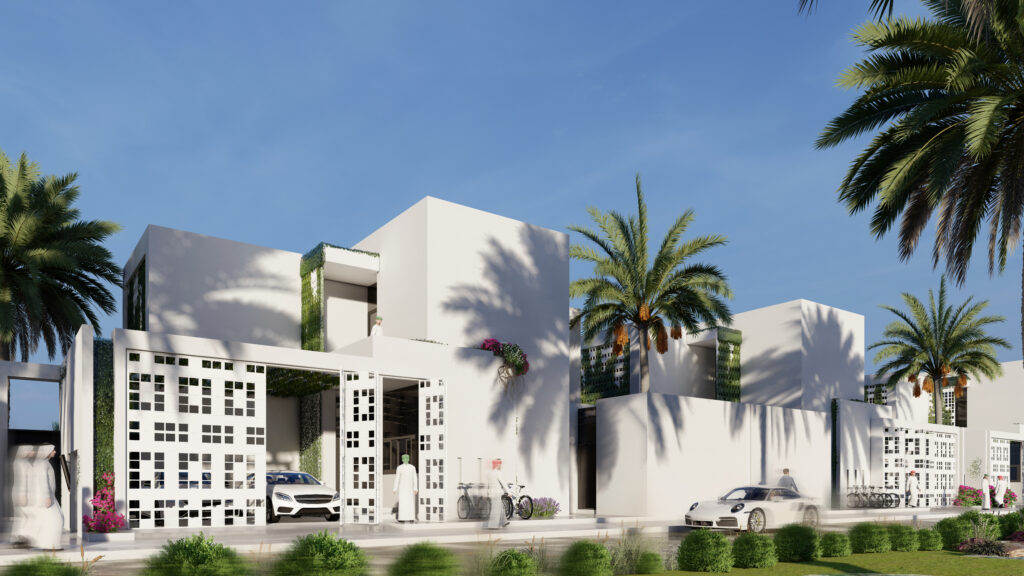
A visionary exploration of eco-conscious minimalism, designed to thrive in arid climates through passive cooling and biophilic integration. The architecture is defined by its stark white cubic volumes, which reflect solar heat, and intricate geometric mashrabiya screens that provide natural ventilation and privacy without sacrificing daylight. By weaving vertical greenery and palm-shaded courtyards into a clean, modular layout, the project demonstrates how luxury and sustainability can coexist—creating a high-performance sanctuary that reduces its environmental footprint while offering a serene, light-filled living experience.
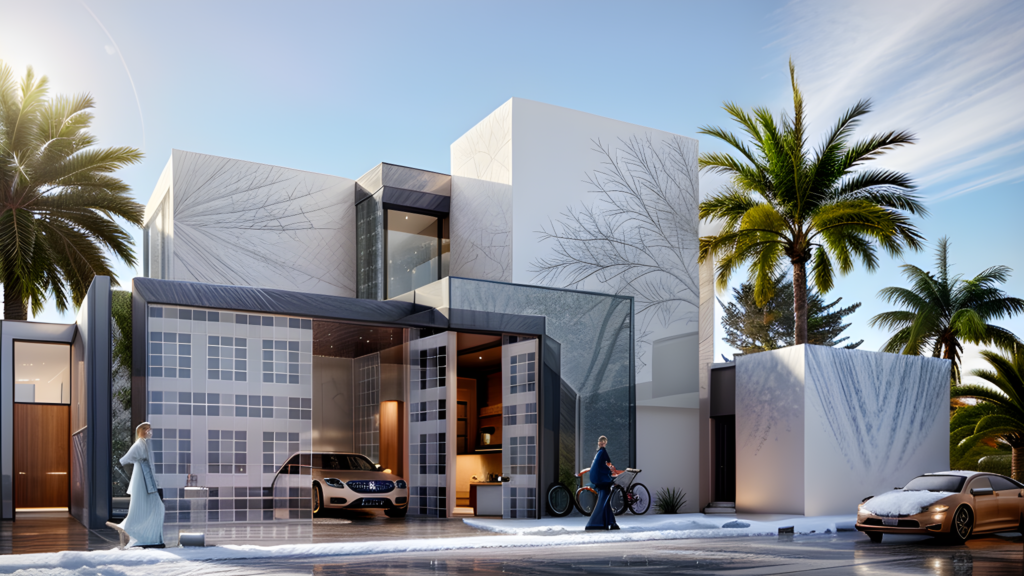
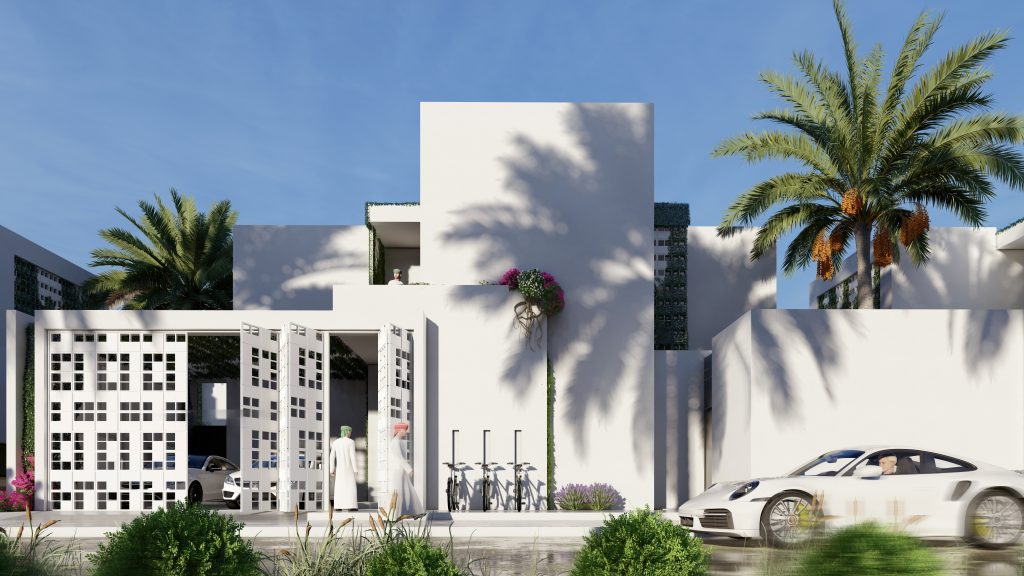
A pioneering residential prototype developed for the global competition in Dubai, specifically engineered to meet the mandate for a sustainable, affordable, and culturally resonant Emirati home. Responding to the competition’s requirement for a 450 m² plot, the architecture utilizes a modular “white-box” system that reflects intense solar heat while offering the flexibility for future expansion—allowing a 3-bedroom layout to scale up to 5 bedrooms as family needs evolve. The design artfully integrates modernized mashrabiya screens and passive cooling strategies to ensure energy efficiency in the UAE’s extreme climate, while “must-have” social spaces like the Majlis and private courtyards honor traditional Emirati privacy and hospitality. By marrying low-carbon materials with smart home technology, this project delivers a net-zero-ready sanctuary that fulfills the vision of a resilient, cohesive, and forward-looking community for the next generation of UAE citizens.
Key Features
Reflective Surfaces: The brilliant white facade is a functional choice to minimize heat absorption in sunny environments.
Perforated Privacy: The custom geometric screen walls (mashrabiya) act as natural air filters and light diffusers.
Modular Verticality: The staggered block design creates natural shading for lower levels and private rooftop garden pockets.
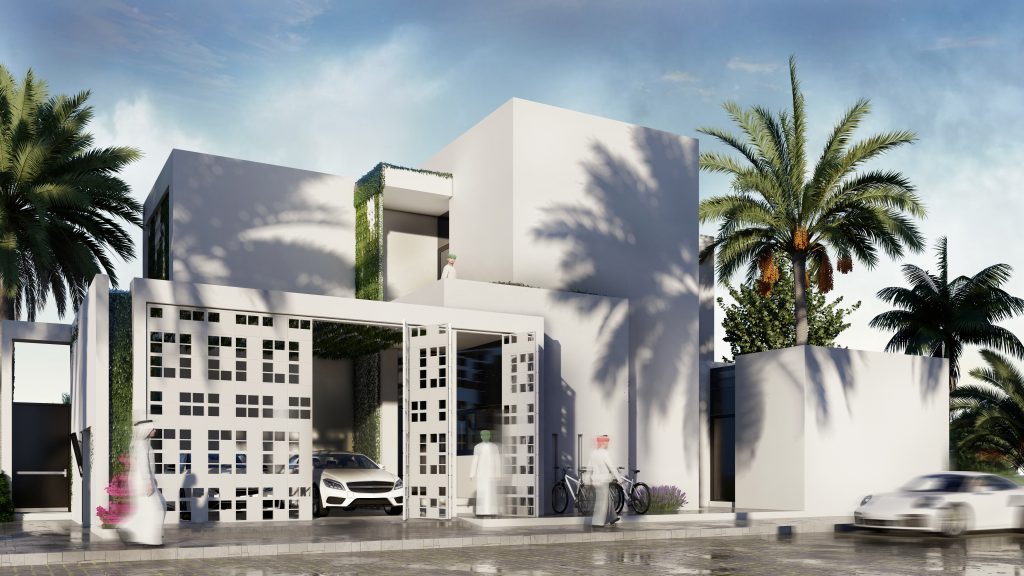
Key Requirements Addressed:
Adaptability: The design supports a standard family of 4–6 members with built-in “expandability” features.
Climate Resilience: Use of heat-reflective materials and passive cooling to handle heat waves and high humidity.
Cultural Privacy: Specific zoning for the Majlis (social area) and service blocks (maid/driver rooms) to respect local social norms.
Economic Feasibility: A design optimized to stay within the competition’s budget cap while utilizing locally sourced materials.